During the event on Day 1, participants will get a chance to attend one of the following workshops. These “How To” sessions are designed to give delegates a practical understanding of how to carry out a particular activity. Our speakers have experience that could help delegates to understand the pitfalls, practicalities and lessons they may have learned.
Workshop leaders will also produce a simple ‘guide’ to the subject that will be available to delegates during the session and to all online after the event.


1. How to bring kids to coding and coding to kids
Martina Mayrhofer, El Teb; Yakov Ostanin, PH International
The workshop will give you a practical understanding of how to launch and carry out a successful extracurricular coding club and a network of coding clubs, based on two different, yet similar experiences – Coding clubs in Russia and Code Club International, powered by Raspberry Pi foundation. Together we will talk about what coding clubs stand for and what is the philosophy behind Code Club International. You will learn how to use the tools and create your own game through Scratch or Kodu Game Lab and why only coding classes are not enough.
Moreover, you will learn the core principles and pitfalls of running a coding club and design your own exciting coding club programme for youth.
What you need: preferably your own laptops
2. How to create and use open badges
Doug Belshaw, consultant, writer
In this workshop, participants will design and issue their first digital credential. You will learn about the Open Badges specification, as well as what kinds of organisations are using badges and for what purposes. You’ll be taken through a design process to think about what kind of badges might work in your context, and the badge pathways that learners might find valuable. This process will include mapping other organisations you could work alongside to endorse one another’s badges.
This workshop is suitable for all levels of experience with credentialing, whether your organisation already issues certificates and awards, or is just interested in how that might be possible. The range of case studies introduced will help participants see ways in which badges can be used in a range of contexts to signify anything from achievement to affiliation. You’ll leave feeling empowered to get started with badges straight away when you return to your organisation!
What you need: preferably your own laptops
3. How to work with disadvantaged groups to empower them as prosumers
Veronique De Leener, MAKS vzw
In many computer courses and learning centres, facilitators focus on training learners how to use a specific software like Word, Excel, Photoshop, etc. instead of promoting computational thinking. MAKS vzw experience with low-skilled learners showed us that creative processes with the computer can increase not only digital skills but also 21st century skills like problem solving, creativity, communication, self-expression.
In this workshop, we will show and let you experience our different approach to digital learning through creating a digital story or a game. We will give you different concrete examples of how people can learn to produce something with the computer and together we will find out the benefits of this methodology.
What you need: preferably your own laptops
4. How to engage and enable young e-facilitators to better support your target groups (I-LINC workshop)
Julia Ackerman, Germany; Greta Jurgutyte, Lithuania; Mihai Macarie, Romania. Support: Iva Walterova, ALL DIGITAL
Three e-facilitators, selected as the best young digital changemakers by the I-LINC project for their work during Get Online Week (GOW) 2017, will lead this workshop. These young people have gone through a journey of learning and self-improvement enabling them to help people to acquire digital skills and to empower them to actively participate in a continuously changing digital society.
Representing differing backgrounds, views and experiences from their home countries Germany, Lithuania, and Romania, the speakers will describe their journeys towards becoming e-facilitators. After this introduction, the scene will be set for a workshop, during which participants will learn, discuss and co-create ideas on how to best encourage and enable young people to become young e-facilitators in their organisations. The young e-facilitators come from such diverse local, regional and national backgrounds, that each participant of the workshop will be able to relate, share and learn from the discussed experiences.
An I-LINC policy paper created by ALL DIGITAL with active involvement from the young e-facilitators will also be shared with the participants of the workshop. Workshop participants will have a chance to contribute to the policy recommendations in this paper. The paper will be shared through I-LINC channels and contacts on the European and national policy maker level.
What you need: any device from which you can access Internet
5. How to use UMI (Ubiquitous, Mobile, IoT) technology to promote STEM education
Monica Divitini, Norwegian University of Science and Technology; Achilles Kameas, Computer Technology Institute and Press “Diophantus”; Kieran Delaney, Cork Institute of Technology
The aim of the workshop is to introduce the participants to UMI (Ubiquitous, Mobile, Internet of Things) technologies and their potential use in STEM education. The workshop addresses managers of training organizations, teachers and trainers, as well as educational policy makers.
We will present UMI technologies and their potential use in education and training. Hands-on activities will be offered, using the UMI-Sci-Ed online collaboration platform and the powerful UDOO Neo kit, an Arduino-powered Android / Linux single board computer enriched with sensors, Bluetooth 4.0 and a Wi-Fi module.
The following topics will be covered:
- Introduction to UMI technologies and their potential use in education and training
- Demonstration of the UDOO Neo kit as an enabler of educational application of UMI technologies
- Demonstration of the UMI-Sci-Ed online collaboration platform as an enabler for participation in the Communities of Practice and for promotion at European level
- Hands on session on the design of a training scenario using UMI technologies and the UDOO Neo kit
This workshop is supported by the H2020 UMI-Sci-Ed project. Visit http://umi-sci-ed.eu/ for info, tools and participation possibilities.
 This year the ALL DIGITAL Summit will serve as the final event of the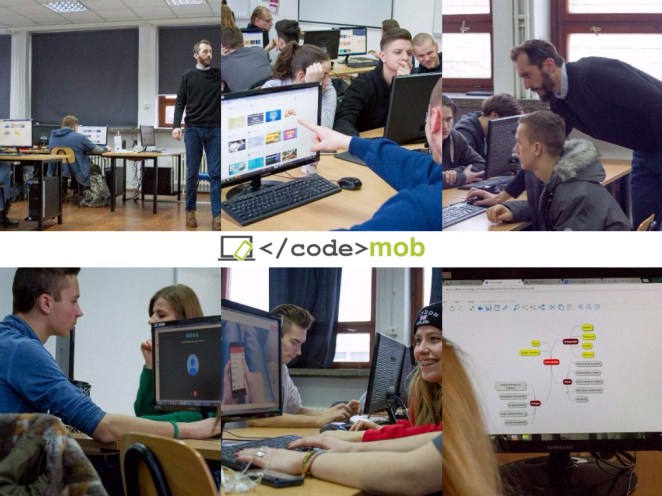


 Nationwide actions of
  Today Digital Media is essential for communication and participation in society. Although senior citizens could benefit from digital opportunities, they are the population group which is often not yet online. Therefore the project “
 The new methods of digital payments are changing rapidly and constantly, and a large part of the population is very concerned and feel insecure about those changes, especially the elderly, women and (other) vulnerable groups. Telecentre-Danmark believes independent Information and tuition is needed, so through this project they offer training and awareness raising on new payment methods for vulnerable groups. They have arranged theme days, talks, mini conferences, Village Hall meetings for 300 participants and also produced a 30-minute TV programme with more than 1 mln views.
 The Digital Learning Lab shows exemplary new learning and teaching spaces for the future of education –in schools and furthermore in different contexts of digital inclusion. The project deals with the most important future-oriented questions regarding digitization:
 AUPEX is the folk-high-school association of Extremadura (Spain), a non-profit organization that develops a variety of cultural and lifelong learning projects across the region, the
  Coding is a fun challenge, and it offers many advantages as well! It stimulates analytic thinking, cooperation and creativity – indispensable skills in today’s (digital) society. The ‘Code your Future’ project gave underprivileged children and youngsters the opportunity to develop these skills. The project consisted of three sections:
 The
The  The Digital Skills and Jobs Coalition is part of the new EU Skills Agenda. The DSJC works on both quantitative aspects (pledges) and strategic aspects (national coalitions). The purpose of these actions is to bridge the digital skills gap and prepare for the digital transformation. The specific objectives of the coalition are outlined in the member’s charter which will be discussed in the presentation.



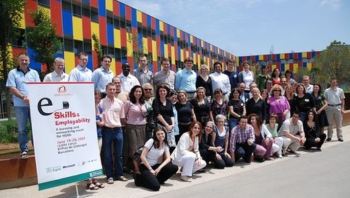 10 years ago a group of telecentres networks managers met at
 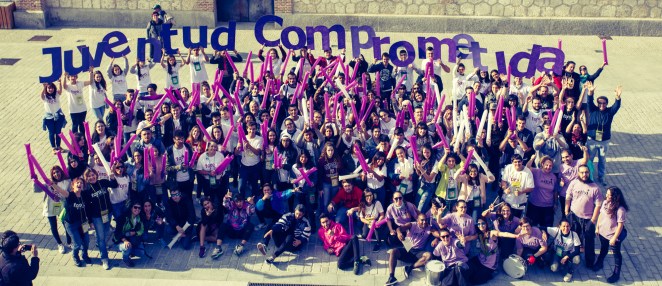 To achieve our goal, Fundación Esplai has developed several initiatives during the last 10 years, adapting projects and proposal to citizens real needs, we would like to share with you some of these initiatives
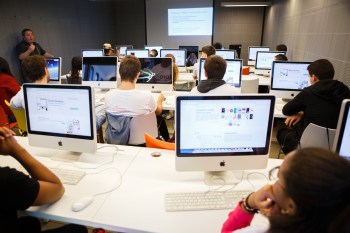 Red Conecta is our initiative to promote digital literacy and employability. It is a network of 67 centres around Spain operated by local NGOs. Red Conecta promotes digital skills and digital literacy among vulnerable groups, mainly focusing on NEET’s, women over 45 year old, long-term unemployed, seniors and migrants. More than 300 e-facilitators have been involved in Red Conecta activities during the last year, assisting 23,000 final users.
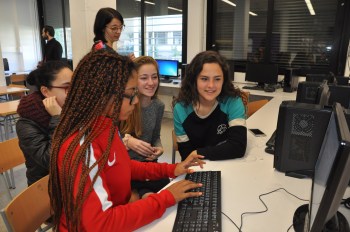 Conecta Joven is a Service Learning methodology project shared by a network of NGOs, which promotes the participation of young people aged 15 to 19 in their community through training, aimed at improving the digital skills of citizens (youth, adults, and elderly) and groups with difficulties of integration. Conecta Joven promotes networking between education communities, local NGO’s, young and elderly to fight against social exclusion through bridging the digital gap.
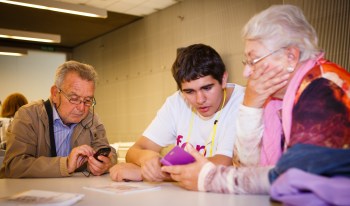 It is a training experience for elderly people, focused on the possibilities offered by smartphones, tablets and the Internet. The methodology is based on “bring your own device”. Each participant learns with the tools they use in their daily life with the support of e-facilitators.
![By Steve Jurvetson from Menlo Park, USA (Catalan Climbers) [CC BY 2.0 (http://creativecommons.org/licenses/by/2.0)], via Wikimedia Commons](https://summit.all-digital.org/wp-content/uploads/2017/07/catalan_climbers.jpg?w=230&h=289)
 In Catalonia we have a telecentre network, called
  Looking at this process, which agrees with the European Union and the Smart Catalonia strategies, in 2016 we decided to promote the Catalan digital social innovation system, through a new program called CatLabs (Catalan Laboratories) and the CatLabs Network. We invited all the digital manufacturing spaces (Makers, Fablabs, Ateneus), coworking spaces, Punt TIC (telecentres), living labs, Professional Training centres and other projects and labs to meet each other in the Catlabs Nework in order to work together in open innovation and open science with social aims.
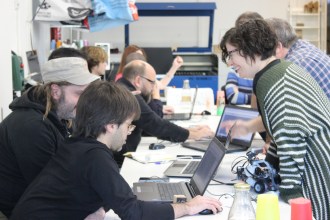 Of course, universities, research centres, government and companies have been working together for a long time. And citizen have been the consumer, the tester and the recipient of innovation, ICT tools, and public policies. The CatLabs’ main aim is to involve people in their design, in the finding of solutions to their needs.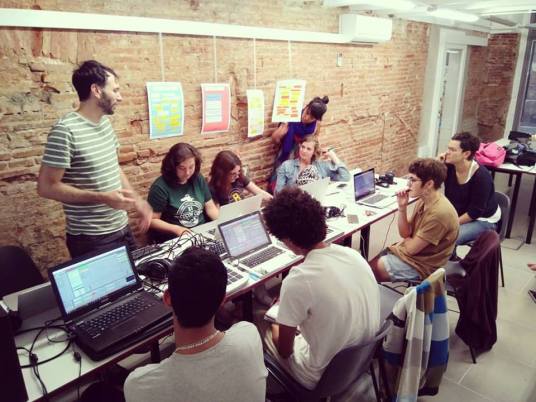
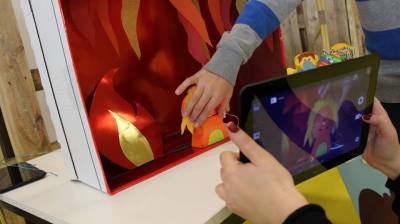 Over the years, Teb professionals have learned from our daily practice in the Raval, and that is why we try to transfer that “know-how” and also our view of the world to other projects, other entities and other places. For example, we created the first telecenter in Catalonia and we have helped to develop the other 650 ones. We manage, at the request of the Government of Catalonia, the network of Telecentres Punt TIC and also projects of advice to the associations. We learn from them.
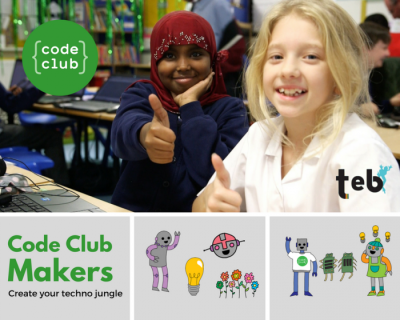 Always in social settings, we help entities and citizens to incorporate technologies to better manage and communicate and develop their own networks and activities (training, workshops, projects, etc.). We also develop web platforms and e-learning training, based on the use of free software. We provide very specific training on the social use of digital tools and, in recent years, we have participated in European technology projects with our ALL DIGITAL partners. We are always learning and offering our knowledge, freely and openly.
 These innovations include mobile learning, coding for digital inclusion, collaborative opportunities on the social internet, STEAM education and many others.
 Nowadays, the centres becoming more innovative spaces than ever before, developing and applying new learning strategies and approaches, expanding their scope to include co-creation, mobile learning, coding, use of open data, digital manufacturing tools and much more. The centres offer citizens new tools that empower them to become ‘prosumers’ and to co-generate content, knowledge and new collaborative opportunities (in both social and labour fields) within the framework of the Social Internet. They help to include citizens in the labour market and to create new circular, collaborative, and cooperative economies. The delegates will explore and share these new approaches in a variety of discussion groups, workshops, and plenary sessions.
 El Teb is a non-profit organization working for social and digital inclusion in Barcelona. El Teb believes in the Social and Solidarity Economy and the Technological Sovereignty, stands for Free Software and promotes innovative activities on programming, robotics, 3D printing, etc. El Teb manages one of the first telecentres in Spain and contributed to the birth of the first telecentre network in Catalonia, in 1999. Currently, El Teb works on coordination and advice of the 650 telecentres of the Punt TIC Network.
  Punt TIC is the Catalan network of telecentres. Born in 1999, currently comprises 650 centres, which promote social and digital innovation, co-working, entrepreneurship, digital inclusion, educational robotics, etc. The telecentres are managed by local administrations or private entities, and the Catalan Government coordinates them, through the Secretary of Telecommunications, Cybersecurity and Digital Society.
  Fundación Esplai is a Spanish national organization promoting committed citizenship with social inclusion, social-educational action and a responsible use of ICT, with a specific focus on childhood and youth, beating for the momentum of third sector. Fundación Esplai is working in four specific areas: social-educational and e-inclusion, training and employability; third sector empowerment; and innovation. Fundación Esplai has been a partner of ALL DIGITAL from the very beginning in 2007.


 ALL DIGITAL SUMMIT 2021 | Oct 13-15 | ONLINE