The “How To” workshops will be conducted on Day 1 of the Summit. They are designed to give delegates a practical understanding of how to carry out a particular activity. Our speakers have experience that could help delegates to understand the pitfalls, practicalities and lessons they may have learned.
Workshop leaders will also produce a simple ‘guide’ to the subject that will be available to delegates during the session and to all online on our community networking Unite-IT platform after the event.


1. How to coach youngsters to share their opinions on Global Citizenship issues through digital stories
Jasper Pollet, MAKS vzw
Migrations, wars, global warming, gender equality, violent extremism, … – the problems of today are also grasping lots of our local young people, but discussing them in your class or youth centre seems daunting and difficult. With Digital Storytelling we can let youngsters reflect on these topics, create a safe environment where they can discuss and learn to empathize with other opinions and give them a voice in the public debate. It’s a non-formal, intuitive and rather simple way of enhancing digital skills and learning new methods of communication.
During this workshop we will give you an introduction to the step-by-step programme based on the BRIGHTS methodology on how to create a Digital Story and coach you to facilitate this training for your own youngsters. We will show you a few examples made during the BRIGHTS training all over Europe. But to learn how to facilitate a Digital Storytelling workshop you need to have experienced the power of the method itself.
Making a personal Digital Story is a combination of a group and personal effort where writing, listening, understanding, speaking, reacting, discussing and finding middle grounds are what drives the progress. Therefore in this workshop we will focus on how to facilitate and coach a story circle, the most essential part of the Digital Storytelling methodology. A story circle is the part where everyone in the group shares their personal stories connected to one of the given topics. It’s a phase that’s reminiscent of the safety and warmth created by a bonfire where people share stories and discuss them among themselves.
You will be guided through this process, together with a group discussion on how we experienced deploying the Brights method in schools and youth centres.
This workshop is supported by the BRIGHTS project.
What you need: preferably your own laptop or tablet, but the trainers will provide some
2. How to create a mini-MOOC
Bill Vassiliadis, DAISSY Research Group of Hellenic Open University
In this workshop, participants will design, develop and publish elements of their own mini-MOOC (short duration Massive Open Online Course). You will learn about current MOOC trends, design and development challenges and distance learning quality issues.
Hands-on activities will guide you through the various steps of:
- MOOC-Analysis: identify and describe requirements, demands and constraints
- MOOC-Design: conceptualise and design the MOOC including the basics of instructional and pedagogical design
- MOOC-Implementation: implement a mini-MOOC draft using an on-line platform and finalize it through testing.
This workshop is suitable for all levels of experience with e-learning, whether your organisation already uses e-learning solutions or is just interested in how that might be possible. The range of case studies introduced will help participants see ways in which mini-MOOCs can be used in a range of contexts to promote learning and knowledge dissemination.
This workshop is supported by and is based on the experience of the BRIGHTS project.
What you need: preferably your own laptops
3. How to introduce human rights issues and enhance digital skills of low-skilled adults, using digital storytelling.
Eric Gijssen (in English) and Bakhta Benzaza (in French), MAKS vzw
Digital Storytelling is a very easy technique with a low threshold. Participants can tell personal stories or give their personal point of view on different subjects, by creating a short film made of photos and still images, some sounds and music, titles on the screen and – most important! – their own narrative voice. Since the format is very simple, all attention can go to the creation of the story and the personal expression of the maker. This audio-visual technique is very suited for groups that are less literate or have difficulties in reading.
And it’s also a wonderful technique to make participants – in a group activity – reflect on a complex theme like ‘the European Human Rights Charter’. What does it mean to them, from their personal point of view? The first sharing of the stories happens within the group itself and this creates great emancipatory effects!
While working on the films, participants help each other and learn together. That makes it a wonderful activity for peer learning. By making the films – and using their smartphones, tablets or computers in a new and creative way – the participants acquire a series of 21st century skills, linked to new technologies, solving problems, social skills… but also to the concept of ‘learning to learn’.
In this workshop we will tell you all about the HURISTO methodology and how you can use it. We will talk about our experiences with the groups in Belgium, Italy and Spain: the successes, but also the obstacles and pitfalls. And – last but not least – we will make a very short digital story together, in iMovie (on iPad).
What you need: preferably your own laptops or tablets, but the trainers will provide some iPads too, which you can use during the workshop.
4. How to inspire learners with digital culture – Europeana
Isabel Crespo, Europeana Foundation
The European Year of Cultural Heritage 2018 spotlights digital cultural heritage as a part of people’s everyday lives and, in particular, as an unexploited learning resource for young and old.
The workshop will highlight the strong potential of digital cultural heritage in education and non-formal training and will introduce participants to Europeana, Europe’s platform for digital cultural heritage. Europeana currently provides free access to over 50 million cultural records coming from more than 3,500 museums, libraries, archives and audio-visual collections across Europe. Learners of all ages can find images/text/audio/video/3D content on anything from art, science, history, natural history, fashion and more in over 30 languages. A big part of our collections – over 20 million items – is openly licensed and can be freely reused in educational settings.
The workshop aims to inspire participants to explore Europeana’s rich and diverse digital resources – from thematic collections and virtual exhibitions to educational apps and tools – and help them create new and engaging learning experiences for their training.
5. How to promote STEM education and training with Mobile and Internet of Things technologies
Achilles Kameas, Theodore Panagiotakopoulos, DAISSy research group, Hellenic Open University & Computer Technology Institute & Press “Diophantus”
Mobile technologies and the Internet of Things promise to revolutionize our everyday life. But are the citizens of our society prepared to reap the benefits of these technological and scientific advances? How can we facilitate digital transformation, so as to ensure inclusion in the forthcoming digital society?
STEM education offers a holistic educational approach that facilitates understanding of scientific knowledge and leads to the development of digital and 21st century skills. E-facilitators have to become STEM educators / trainers in order to play a key role in facilitating the digital transformation.
This workshop will offer a methodology for implementing STEM educational activities using UMI (Ubiquitous, Mobile, Internet of Things) technologies, together with tools and good practices. A holistic view of UMI technologies and their potential uses in closing the next generation digital gap will be presented. The UMI-Sci-Ed methodology will be introduced, together with examples from its application in different settings. Participation in the developing Communities of Practice activities will be offered using the UMI-Sci-Ed online collaboration platform.
The workshop will conclude with a discussion on prospective future collaborations in projects that would lead to the development of STEM education / training activities tailored to the needs of different groups of citizens.
This workshop is supported by the H2020 UMI-Sci-Ed project. Visit the site for info, tools, and participation possibilities.
Be smart! Be UMIque! Join the UMI workshop!
 Barcelona is a city full of IoT projects, maker spaces, innovation hubs, design labs, co-working spaces, etc. But there is also a clear tendency that you find these kind of spaces/labs in areas with medium and higher socio-economic level and hardly any in lower income areas. There’s a risk of creating Barcelona of two velocities, with a strong second level technology gap. We started analysing the reasons why activities related to digital manufacturing are not present in this neighbourhood with low socio-economic level, high percentage of migration, complex community situation. What are the risk factors and how can we tackle them? We have created the Makers for Inclusion project to:
 Funded by the Erasmus+ Programme,
  ‘
‘ Smart Women
 WeTechCare
 A proliferation of news and fake-news sources, distribution networks combined with a greater polarisation by mainstream press makes it increasingly hard to tell fact from fiction. Young people report being turned off politics because of a feeling of alienation in the face of misinformation.
 Are we aware of the magnitude of the digital transformation and its impact in our society?
 On 18-19 October 2018, ALL DIGITAL (formerly Telecentre-Europe) will organise its 11th annual summit under the title DIGITAL JOURNEY: FROM INCLUSION TO EMPOWERMENT. The event will be held in Brussels and co-hosted by our Belgian member


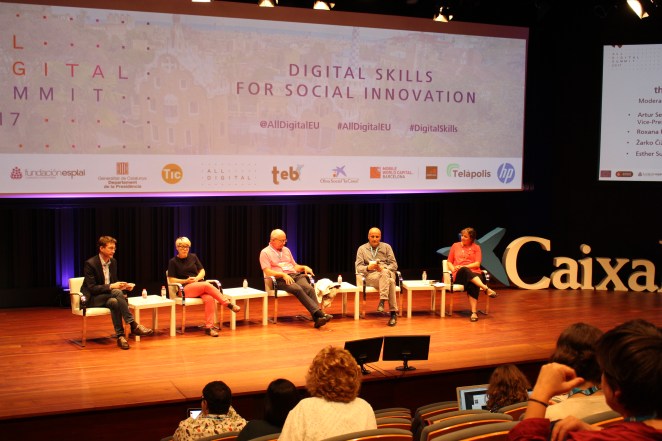
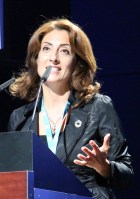 Therese Jamaa, general manager of GSMA Mobile World Capital, shared the most important lesson she had learned during her many years of experience in development and social responsibility projects with mobile technology: whatever projects for digital inclusion we undertake, we need to start from the actual needs of the people we are addressing. Even if we have the best idea in mind, even if we think that this is the thing that’s going to change the world, we should first try to understand the local context and prepare the ground.




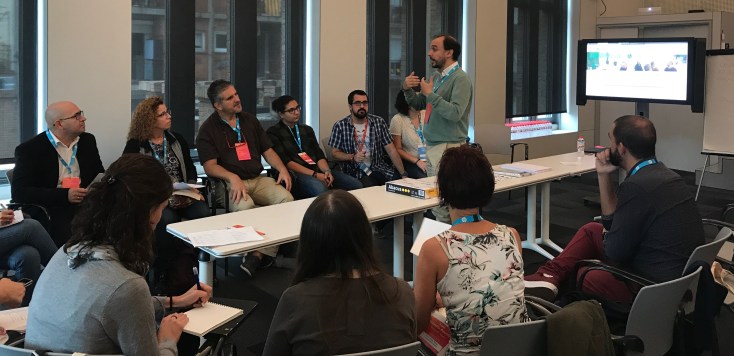 During the session, Fernando Vilariño, the associate director of the Computer Vision Cetre and associate professor of the University Autònoma de Barcelona, presented a very concrete but complex project: the Living Labs. The objective of the initiative is to boost the revitalization of underused spaces at public libraries and to create conditions for projects that are initiated by the community.
 Some results of the Living Lab in Barcelona: participants took ownership of the initiative, applying for specific training and developing their own dynamics and doing their own researches. New members were integrated through the word of mouth, creating an interactive community around technologies in public spaces. The project can be scaled in the rest of the libraries of the library network in Catalunya with the same scheme: no expectations, no objectives, just support and motivation when required. Giving the chance to fail in order to learn.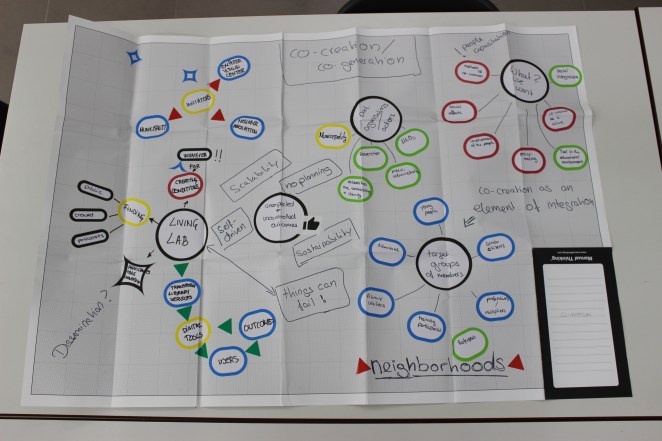
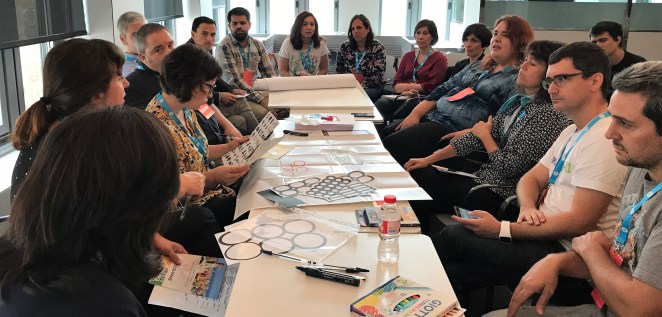 The session “Coding for Inclusion” with the expert Carme Badia Verdeny, e-facilitator at
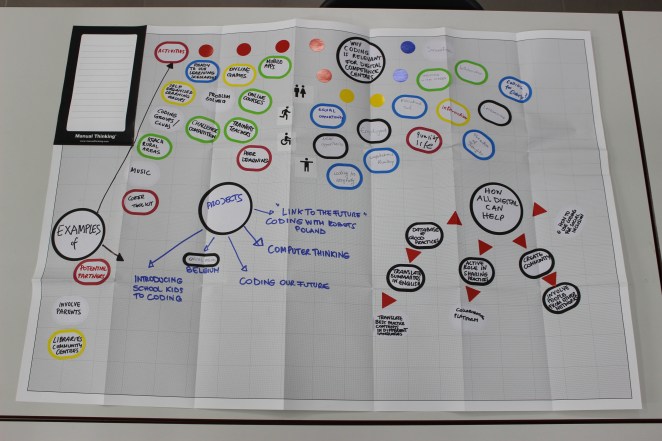
 The Open Culture and Innovation workshop, facilitated by Besjana Hysa from Albanian Institute of Science, was aimed at discussing the new EU legislation on copyright reform, an initiative for strengthening the European digital single market. Copyright legislation helps to prevent unauthorized exploitation of intellectual products, which is becoming an increasingly important issue in the digital world. However, many share concerns about the new EU legislation, which was described by invited expert Federica Fulghesu, engagement coordinator at Mozilla Foundation. She highlighted 3 problematic articles:
 Participants agreed that while the new EU legislation may not affect their work directly, it is important to inform the public about this legislation and its possible implications. Digital learning centers have an important role to encourage people sharing ideas, finding alternative solutions, and to provide access to independent and free data and information. Awareness raising and education on copyrights, creative commons, licenses, open source is very important, and it might be a scope for Get Online Week.
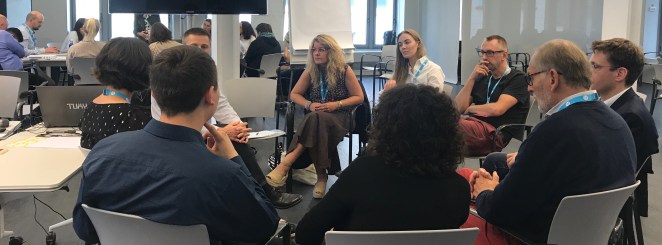 Digital manufacturing is all about the Maker movement. It has emerged as a result of evolution or influence of open software and open hardware philosophy. The Maker movement is based on the Do It Yourself (DIY) method, and it is changing the paradigm in education, design, manufacture, industry and use of technology in social inclusion and participation. Everybody can change their own environment, making things to improve and trying to resolve any problem they can imagine, working together with other people face to face or online in digital social communities.
 The Fabrication Athenaeums are public and open-to-community rooms that integrate different daily activities of the district providing solutions to common problems and boosting opportunities regarding the challenges for the future of self-sufficiency.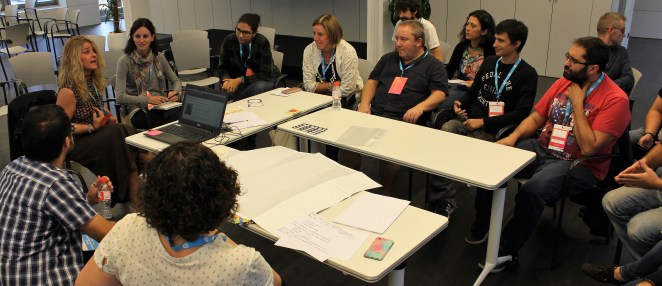
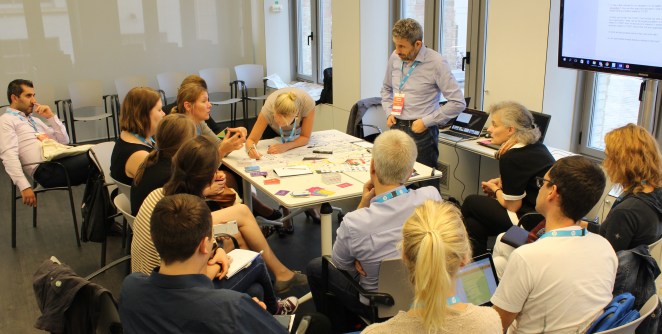
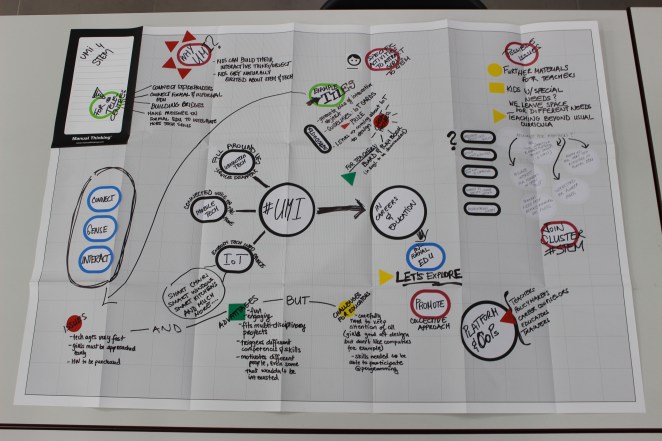
 Disadvantages and difficulties may include connecting this activity with specific career options, fitting teaching scenarios to right target groups, integrating basic digital skills and focusing too much on technology, problems with creating ownership of the solution in students, so that they would be excited to take the next step. This may also create issues in moving from the fun design part to real solution developing new skills. Further hurdle may be represented in a lack of accreditation system for this kind of activity.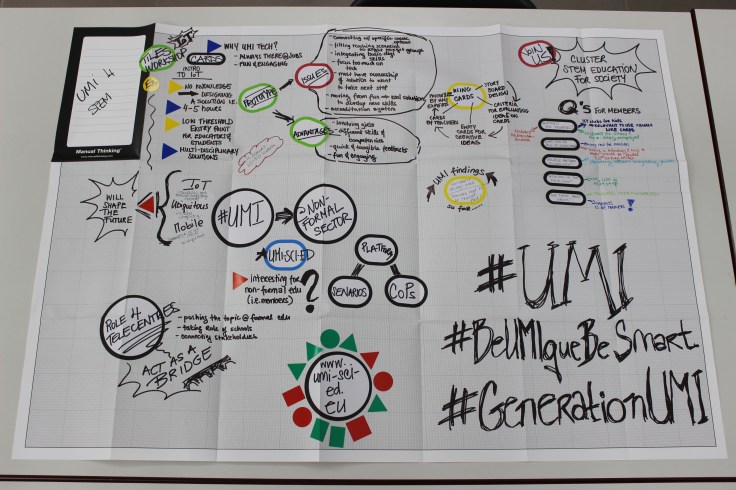



 The
The  The
The And the
  The
The 


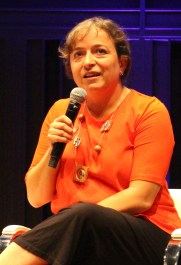 had been working in a poor neighbourhood of Barcelona for 25 years. It was 1998-99 when they started to use computers. Young people had to discover themselves how to use computers, which helped them to develop new skills and confidence. However, not everyone had good computers and good internet at home, so they switched to mobile devices, which today everyone has and uses on a daily basis. Mobiles are cheap and powerful tools to create, to learn, and to empower people. The aim is not to explain people how a mobile device works, but how we can use them to change the world of community. Esther mentioned concrete examples where young people found effective ways to use mobile devices for solving real problems or engage in public dialogue.
 Zarko Cizmar
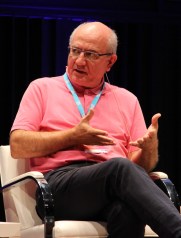 Arthur Serra
 Roxana Rugina
 The
The  “la Caixa” is the leading financial group in the Spanish retail banking.
  Barcelona is the capital and largest city of Catalonia. Its


 ALL DIGITAL SUMMIT 2021 | Oct 13-15 | ONLINE